# Fine-Tuning Models: Unlocking the Extraordinary Potential of AI
Table of Contents
1. What Is Fine-Tuning?
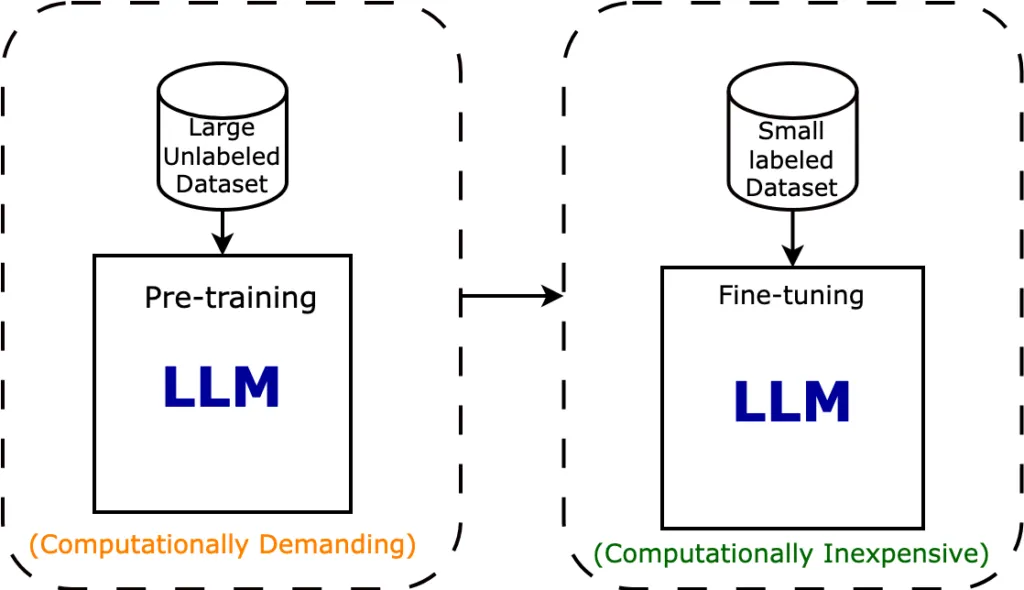
Fine-tuning is a key process in AI training, where a pre-trained model is further trained on specific data to specialize in a particular task or domain.
Think of it this way: It is like giving a generalist expert additional training to become a specialist. For example:
- Pre-trained model: Knows general knowledge (like basic reading comprehension or common language patterns).
- Fine-tuned model: Gains expertise in a specific field, such as medical diagnostics, legal analysis, or poetry writing.
2. Why Is Fine-Tuning Necessary?
Pre-trained models like GPT-4 and BERT are powerful, but they’re built for general-purpose use. Fine-tuning tailors these models for specialized applications. Here’s why it’s important:
(1) Adapting to Specific Scenarios
General-purpose models are like encyclopedias—broad but not deep. Fine-tuning narrows their focus to master specific contexts:
- Medical AI: Understands specialized terms like “coronary artery disease.”
- Legal AI: Deciphers complex legal jargon and formats.
(2) Saving Computational Resources
Training a model from scratch requires enormous resources. Fine-tuning leverages existing pre-trained knowledge, making the process faster and more cost-effective.
(3) Improving Performance
By focusing on domain-specific data, fine-tuned models outperform general models in specialized tasks. They can understand unique patterns and nuances within the target domain.
3. How Does It Work?
It typically involves the following steps:
(1) Selecting a Pre-trained Model
Choose a pre-trained model, such as GPT, BERT, or similar. These models have already been trained on massive datasets and understand the general structure of language.
(2) Preparing a Specialized Dataset
Gather a high-quality dataset relevant to your specific task. For example:
- For legal document generation: A dataset of contracts and case law.
- For medical diagnosis: A dataset of clinical notes and research papers.
(3) Training the Model
Train the pre-trained model on your domain-specific dataset, fine-tuning its parameters to optimize performance for your task. This process usually requires only a few training epochs.
(4) Validation and Adjustment
Test the fine-tuned model on unseen data to evaluate its performance. If necessary, refine the dataset or training process to achieve better results.
4. Real-Life Applications
Fine-tuning has revolutionized numerous fields. Here are some examples:
(1) Medicine
- Goal: Develop AI models capable of interpreting medical images or summarizing clinical reports.
- Dataset: Medical records, radiology images, and research articles.
- Outcome: A model that understands medical terminology and improves diagnostic accuracy.
(2) Legal Industry
- Goal: Automate the generation of legal documents or analyze case law.
- Dataset: Legal texts, contracts, and court rulings.
- Outcome: An AI that produces professional, compliant legal outputs.
(3) Financial Markets
- Goal: Enable AI to analyze financial reports or make investment recommendations.
- Dataset: Historical stock data and financial statements.
- Outcome: A system that provides insights tailored to financial decision-making.
5. Challenges
While fine-tuning is a powerful technique, it’s not without limitations:
(1) Overfitting
If the dataset is too small or overly specific, the model may overfit, memorizing data patterns instead of generalizing knowledge.
(2) Cost Dependencies
Fine-tuning is more efficient than training from scratch but still requires computational resources and time—especially for large models.
(3) Data Bias
If the fine-tuning dataset contains biases, the model can inherit or amplify those biases.
6. One-Line Summary
Fine-tuning customizes pre-trained AI models for specific tasks, making them specialists in chosen domains, provided high-quality data and robust training are applied.
You can find some more details in the great paper “The Ultimate Guide to Fine-Tuning LLMs from Basics to Breakthroughs”.
Final Thoughts
Want an AI that writes professional contracts, generates medical reports, or offers personalized insights? Fine-tuning is how you teach a generalist AI to become an expert. But remember, it’s only as good as the data and training it receives.
That’s it for today’s AI deep dive! Follow for more, and let’s keep exploring the endless possibilities of AI together. See you tomorrow!
Ps. feel free to check out my other AI Daily Insights posts at here.